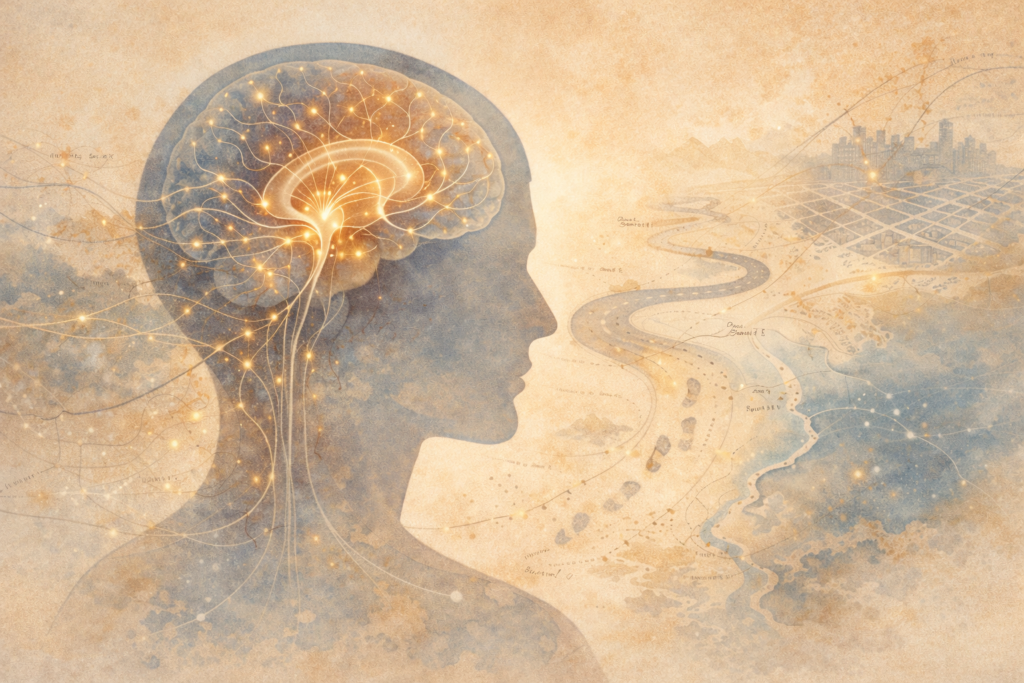
Have you ever returned from a trip feeling refreshed, reset, and somehow different? That “post-trip glow” isn’t just a feeling—it’s the result of real, measurable neurobiological phenomena happening inside your skull. This article explores the surprising neuroscience behind how travel reshapes our minds, one new experience at a time.
1. Travel Forces Your Brain to Build New Connections
When you navigate a new city or immerse yourself in a new culture, you are forcing your brain to adapt. This process, known as neuroplasticity, involves forming new neural connections in response to novel environments. Think of it as building a “neural jungle gym” of new synapses. This dense network enhances key cognitive functions, which is why studies show that travelers consistently score higher on creativity tests. Specifically, navigating unfamiliar places activates the hippocampus (your brain’s spatial memory center) and the prefrontal cortex (responsible for planning), giving your mind a powerful workout.
2. Anticipation Gives You a Dopamine Hit
One of the best parts of a trip can happen before you even leave home. The simple act of planning and anticipating a journey activates the brain’s reward system. This process triggers a spike in dopamine—a neurotransmitter linked to motivation and pleasure—in key brain regions like the ventral tegmental area (VTA) and the hippocampus. This dopamine release does more than just make you feel good; it acts as a powerful “memory booster,” enhancing your ability to recall events that happen around the time of the novel experience. This neurochemical reward is also why simply having a trip on the calendar can make the weeks leading up to it feel more exciting and purposeful, and why the “post-travel slump” is a real effect of dopamine levels dropping upon returning to your routine.
3. It Quiets Your Brain's Inner Critic
Travel provides a much-needed vacation from your own anxious thoughts. Our brains have a network called the Default Mode Network (DMN), which you can think of as its “idle screen”—it’s responsible for self-reflection, rumination, and that nagging inner critic. When you travel, your brain is immersed in present-moment tasks, like figuring out a subway map. This intense focus on the external world disrupts the DMN, literally giving you a break from getting stuck in your own head. Immersing yourself in fractal-rich natural scenes or dense cultural details is an especially powerful way to achieve this mental quiet. This disruption is a key reason why travel feels so restorative, lowering levels of the stress hormone cortisol while boosting mood-lifters like serotonin and endorphins. Even better, it helps build long-term resilience by stimulating BDNF (brain-derived neurotrophic factor), a protein that encourages brain cell growth.
4. Active Exploration Literally Strengthens Your Memories
How you travel matters as much as where you go. Neuroscience reveals a critical difference between active exploration and passive observation. Actively exploring—walking without a strict plan, using local transit, or asking a local for directions—engages the brain’s hippocampal-dependent spatial and episodic memory systems far more strongly than sitting on a tour bus. Episodic memory is your brain’s ability to recall the story of your experience, not just the facts. The effort involved in navigating and problem-solving forces your brain to encode the experience more deeply, offering a practical, evidence-based reason to wander a little.
5. "Post-Flight Confusion" Is a Real, Measurable Effect
While travel offers incredible cognitive benefits, it also introduces physiological stressors. “Post-flight confusion,” jet lag, and circadian disruption are not just feelings of fatigue; they are recognized cognitive disturbances where attention and short-term performance may dip. These effects are compounded by physiological factors like hypoxia (lower oxygen levels on planes). A poorly planned trip where logistics, finances, and other stressors pile up can negate many of the neurological benefits, highlighting the importance of balancing novelty with rest.