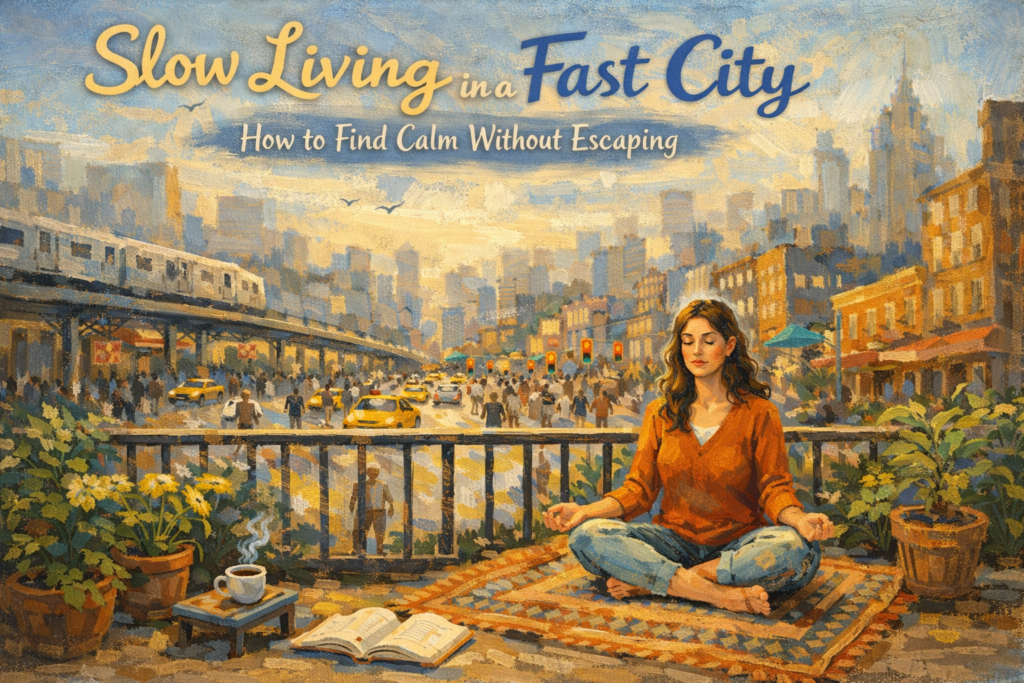
You don’t need to leave the city or move to the countryside to embrace slow living.
Even in fast-paced urban life, it’s possible to create moments of calm, intention, and balance—right where you are.
This guide is for city dwellers who feel overwhelmed by constant noise, tight schedules, and endless stimulation, but still love the opportunities, culture, and energy that cities offer. You want the benefits of slow living without giving up your career, community, or creativity.
Slow living in a fast city isn’t about doing everything slowly.
It’s about choosing what deserves your attention—and letting go of what doesn’t.
Understanding the Power of Mindful Urban Living
Busy vs Productive: Know the Difference
ity life has a way of making us feel constantly occupied. Meetings, social plans, notifications, deadlines—everything feels urgent. But being busy is not the same as being productive.
Productivity moves you toward meaningful goals.
Busyness keeps you occupied without fulfillment.
Think about your last week. How much of your time went into things that actually mattered to you? Many urban routines are packed with obligations that feel important but don’t align with personal values. This creates exhaustion without satisfaction.
Slow living starts with selectivity:
Saying no to commitments that don’t align with your priorities
Choosing deeper work over constant checking
Valuing quality time over constant availability
A simple exercise: track your activities for a few days. Notice what energizes you and what drains you. The difference becomes clear very quickly.
Identify Your Personal City Stress Triggers
Every person experiences city life differently. What energizes one person may overwhelm another. Understanding your personal stress triggers is essential for creating calm.
Common urban stressors include:
Noise and traffic
Crowded public transport
Long commutes
Construction sounds
Tight schedules and constant urgency
Pay attention to physical signals—tense shoulders, shallow breathing, fatigue, irritability. These often appear before mental awareness.
Create your own trigger map:
Times of day when stress peaks
Places that affect your mood
Interactions that drain your energy
Environmental factors that overwhelm you
Once you identify these patterns, you can prepare for them—or reduce their impact intentionally.
Choose Intentional Responses Over Automatic Reactions
City life pushes us into autopilot. Someone cuts you off. The train is late. A notification interrupts your focus. Most reactions happen automatically, adding unnecessary stress.
Slow living is about pausing before reacting.
That pause—sometimes just two seconds—creates space for choice.
You may still feel frustration, but you don’t have to live inside it.
Practice the two-second pause:
Before replying
Before reacting
Before rushing
Over time, this simple habit restores a sense of control. You stop spending energy on things that don’t deserve it.
Master Your Daily Rhythm and Pace
Create Morning Rituals Before the City Takes Over
Your morning sets the tone for the entire day. Waking up even 30 minutes earlier than the rush allows you to start grounded instead of reactive.
This doesn’t mean extreme routines. Keep it simple:
Make tea or coffee without your phone
Write a few lines in a journal
Stretch or breathe for five minutes
Consistency matters more than perfection. When repeated daily, these rituals become emotional anchors you can return to—even during chaotic moments.
Build Strategic Pauses Into Your Workday
Urban work culture glorifies constant motion. Slow living introduces intentional pauses.
Block 5–10 minutes between tasks. Treat them as non-negotiable.
Step away from screens. Breathe. Walk. Stretch.
These “micro-breaks” reset your nervous system and prevent burnout before it builds up.
Ask yourself throughout the day:
How am I breathing right now?
Where am I holding tension?
What do I actually need in this moment?
Create Evening Wind-Down Rituals
Cities rarely slow down at night—but you can.
Begin unwinding during your commute:
Notice something beautiful
Listen to calming music
Practice slow breathing
At home:
Change clothes immediately
Dim the lights
Reduce noise and stimulation
Limit news and work messages after a certain hour. The world can wait. Your nervous system needs rest.
Design Weekends for Rest, Not Just Activity
City weekends often become as packed as weekdays. Slow living invites balance.
Schedule one block of unplanned time each weekend.
No goals. No productivity. Just presence.
Balance energy intentionally:
Social → Quiet
Active → Restorative
Stimulating → Gentle
Rest isn’t laziness.
It’s maintenance.
Turn Your Home Into a Calm Urban Sanctuary
Reduce Visual Clutter
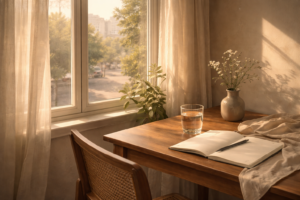
Visual clutter creates mental clutter. Start with surfaces you see daily—tables, counters, desks.
Give everything a “home.”
If something doesn’t serve a purpose or bring calm, let it go.
Less visual noise = more mental clarity.
Bring Nature Indoors
Cities are dominated by hard surfaces. Balance them with organic elements:
Plants
Natural fabrics
Wood, stone, woven textures
Even small changes—like a plant near a window or natural lighting—signal safety and calm to your nervous system.
Create Technology-Free Zones
Designate spaces where screens don’t exist:
Bedroom
Reading chair
Dining area
Physical boundaries create mental boundaries.
Rest becomes deeper. Presence becomes easier.
Practice Urban Mindfulness Daily
Walking Meditation in the City
Turn your commute into a grounding practice.
Feel your steps. Sync breathing with movement. Notice textures, sounds, and rhythm.
City streets are full of sensory anchors—you just have to notice them.
Breathe During Waiting Moments
Waiting doesn’t have to mean frustration.
Try simple breathing techniques while in lines or traffic.
Slow breathing activates calm—even in chaos.
Practice Gratitude in Unexpected Places
Gratitude in the city looks different:
Infrastructure that supports millions
Strangers sharing space
Architecture, weather, light.
Shift perspective. The city begins to feel less hostile and more human.
Build Community That Feels Nourishing
Slow living isn’t solitary. It’s relational.
Learn your neighbors’ names
Support local businesses
Choose fewer but deeper connections
Quality over quantity creates emotional safety in crowded places.
Creating Calm Without Leaving the City
Slow living in a fast city isn’t about escape.
It’s about intention.
When you slow your thoughts, design supportive spaces, choose mindful routines, and connect deeply with people around you, city life transforms. The noise doesn’t disappear—but it stops controlling you.
Start with one small change.
One pause.
One boundary.
One quiet ritual.
And slowly, your city becomes not just a place you survive—but a place where you feel at home.
What would change in your life if you stopped rushing—and started choosing presence instead?